

A credible foundation for your sustainability programme.
A materiality assessment is the strategic foundation of any credible sustainability programme. It identifies the environmental, social and governance issues that matter most to your business and to your stakeholders, and provides the evidence base for disclosure priorities, resource allocation and sustainability strategy.
AES conducts materiality assessments for organisations across Australia. Whether you are preparing your first sustainability report, aligning with mandatory ASRS requirements, or undertaking a strategic review of your sustainability priorities, we provide a structured, rigorous process that produces clear and defensible outputs.
Structured process. Clear outputs. A credible foundation for your sustainability programme.
Featured Project
Environmental Management Plans & Inspections
Noosa, Queensland
Applied Environment & Safety provided environmental support to PCA Ground Engineering during road embankment stabilisation works in Noosa, Queensland. These works were important to maintaining the long-term serviceability of the road and drainage infrastructure at this location.
Our role on this project was to provide technical environmental support. This included the development of a Construction Environmental Management Plan, Sediment and Erosion Control Plan, and Rehabilitation Plan. Then we undertook inspections of the works during construction to ensure compliance with the controls for the environmental aspects.
What is a materiality assessment?
A materiality assessment is a systematic process for identifying and prioritising the sustainability topics that are most significant to an organisation. The process typically involves mapping the full universe of potential sustainability topics, assessing their significance through internal analysis and stakeholder engagement, and producing a prioritised set of material topics that informs reporting scope, strategy and investment.
Different reporting frameworks apply different definitions of materiality, and understanding which applies to your organisation is essential for producing a compliant, defensible result:
- GRI Standards: identifies topics that reflect significant economic, environmental and social impacts, informed by stakeholder input
- ISSB (IFRS S1/S2) and ASRS: financial materiality, where topics are material if they could reasonably affect investor decisions
- Double materiality: both impact materiality (effects on the world) and financial materiality
Materiality assessments are no longer optional. Under GRI Standards, the results must be disclosed and explained. Under ASRS, entities must identify and disclose material climate-related information, and must be able to demonstrate how they reached that determination.
What we include
AES provides a complete materiality assessment process, including:
- universe of topics identification and mapping
- internal stakeholder workshops and structured interviews
- external stakeholder survey design and facilitation
- materiality ranking and prioritisation methodology
- double and/or financial materiality assessment as required
- materiality matrix development and visual presentation
- disclosure-ready process documentation and outcome reporting
- recommendations for reporting scope and sustainability strategy priorities
Industries We Support
Applied Environment & Safety provides materiality assessment support for organisations across a range of industries.

Power & Renewables
With vast experience within the power & renewables industry, we understand the risks and opportunities.

Mining & Resources
We provide environmental and safety consulting support to exploration and production operations within the mining and resources industry.

Transport & Civil Works
Our experience in environmental and safety management provides practical support to our clients within the transport & civil works.
Why Work With Applied Environment & Safety
We deliver materiality assessments that are structured, evidence-based and aligned to current reporting frameworks. Our team understands the technical requirements of GRI, ISSB and ASRS, and we guide organisations through a process that is efficient without cutting corners on rigour.
We provide clear outputs, including a materiality matrix, process documentation and recommended disclosure priorities, that are directly usable in your sustainability report and strategy. Our focus is on helping you understand what matters and giving you a clear path forward, without unnecessary scope or cost.
We also practise what we preach. AES is a certified carbon neutral organisation. We measure, report and offset our own emissions each year, so our advice is grounded in first-hand experience.
Discuss your materiality assessment requirements
Tell us about your organisation. Our team will come back to you within one business day to discuss how AES can support your materiality assessment.
Contact our team today to discuss your project requirements.
Other Sustainability Services
Carbon Accounting
Sustainability Reporting
NGER Reporting
Sustainability Management Plans
Decarbonisation Strategy
Sustainability Framework
Climate-Related Disclosures
Climate Change Risk Assessment
Infrastructure Sustainability Rating
View All Sustainability Services
Resources & Insights
-
What is the Rehabilitation Hierarchy? A Guide to Land Rehabilitation and Environmental Management
Rehabilitation is often viewed as the final stage of a project, something that occurs once construction or operations have ceased and equipment has been removed. In reality, effective rehabilitation begins long before the first disturbance occurs. The most successful rehabilitation programs are guided by a rehabilitation hierarchy, a structured framework that prioritises avoiding impacts wherever…
-

Supporting Local Stewardship: Volunteering with NICA
At Applied Environment & Safety, we know that effective environmental protection relies as much on personal and community action as it does on formal environmental legislation and protection mechanisms. That is why we are proud to highlight the impactful work of the Noosa Integrated Catchment Association (NICA)—a community-driven volunteering based organisation doing vital work on…
-
Revegetation
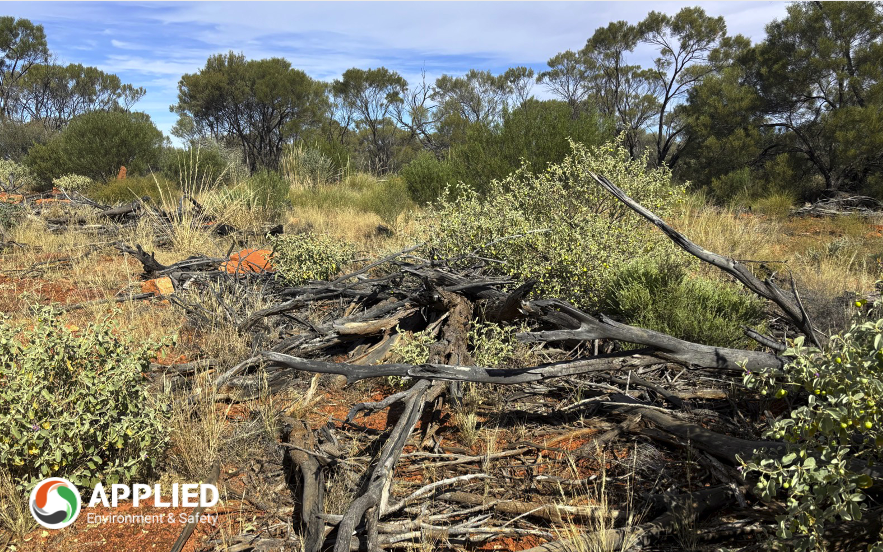
When we talk about revegetation, the conversation often focuses on plants, seed mixes, and vegetation cover. But successful rehabilitation is about much more than getting plants back into the ground. Revegetation to Ecosystem Restoration One of the most overlooked aspects of ecosystem restoration is the reinstatement of habitat features such as woody debris, fallen timber,…
FAQ’s
Common questions from organisations about materiality assessments.
A materiality assessment is a systematic process for identifying and prioritising the sustainability topics that are most significant to an organisation. It maps the universe of potential topics, assesses their significance through internal analysis and stakeholder engagement, and produces a prioritised set of material topics that informs reporting scope, strategy and investment.
Double materiality considers both impact materiality (your organisation’s effects on the environment and society) and financial materiality (sustainability topics that could reasonably affect investor decisions). Organisations aligning with international frameworks increasingly apply both lenses.
Under GRI Standards the results of a materiality assessment must be disclosed and explained, and under ASRS entities must demonstrate how they determined their material climate-related information. Beyond compliance, it aligns internal priorities with stakeholder expectations and provides a defensible basis for what is and is not included in your reporting and strategy.
AES conducts materiality assessments aligned to GRI, ISSB (IFRS S1/S2) and ASRS requirements, including double and financial materiality approaches as required.